

Prepare for the Way You Preach, Not the Way You Prepare

September 3, 2026

Preacher discussing sermon ideas with a diverse group in a cozy office.

Tony Johnson was back on the podcast this week, and he said something in the first five minutes that I haven’t stopped thinking about: “I was preparing for a different style of preaching than what is natural for me.” He was preaching based on the way he prepared, rather than preparing for the way that he preaches. Read that twice. I had to.

Tony told me he used to build these meticulous outlines — detailed enough that he could hand them to someone else and they could preach the message. But when he got up to preach, he wasn’t using the outline at all. He was following the red circles and blue stars he’d scribbled on it. The notes were theater. The real preparation was happening somewhere else entirely.

So he blew it up and started over, building a process that matches how his brain works. Mondays through Wednesdays, he just lives in the passage: reading it, praying over it, letting it marinate. No writing. He calls this white space, and he’s convinced it’s one of the most underused tools in a preacher’s kit. Some of his best material shows up at two in the morning on a trip to the bathroom, not at a desk with a deadline looming. Thursday, he sits down and builds a mind map, breaking the message into four or five movements he can hold in his head rather than a manuscript he has to follow. Less prep time. More authenticity. A sermon that feels discovered rather than delivered.

Now, Tony’s got a teaching team of five to seven preachers to coordinate, which most of us reading this don’t have. But don’t let that get in the way of the real point. If you’re the only voice at a church of 125, you can still build a team around your preparation, even if you’re the only one standing up on Sunday. Ask a few trusted voices in your congregation what they think people need to hear. Let your spouse hear you talk about something you love and compare that energy to your preaching voice. Tony’s litmus test was simple: are you performative, or are you proclaiming something that’s naturally been embedded in you?

He also mentioned something that stuck with me. 2|42 has moved away from Tony underlining scripture on a screen when he preaches and gone back to him simply holding a Bible in his hand. No graphics, no bumpers, just him, the text, and the room. Turns out people aren’t as hungry for polish as they are the Word.

Find the process that fits how God wired you. Then get out of your own way.

Better preaching makes a bigger impact.

Episode Summary

Discover how preacher Tony Johnson transforms his approach to sermon preparation, emphasizing authenticity and responsiveness. Learn practical tips on adapting your preaching style, engaging your congregation, and cultivating your unique voice.

In today’s world, where personal gain often outweighs compassion, the challenge of being a good man is real. But goodness is not about perfection—it’s about action.

Start by identifying ways you can help others daily. Small deeds—sharing knowledge, listening without judgment, assisting those in need—accumulate into significant change. Practice honesty in all interactions, and stand up for fairness even when it’s uncomfortable. Good works aren’t limited to people you know; even strangers can benefit from your kindness.

Surround yourself with positivity, and learn from others who inspire goodness. Remember, integrity is contagious. When you act with humility, empathy, and courage, you become a beacon in a world often clouded by selfishness. Each act of goodness strengthens the social fabric, proving that even one person’s consistent efforts can shape a better world.

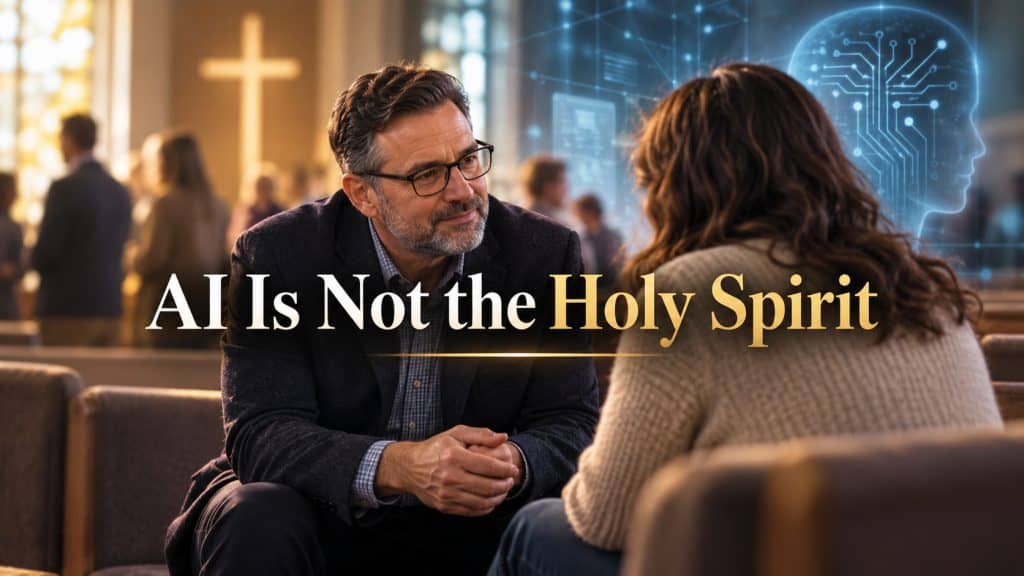
Last week I had the privilege of sitting down with Dave Stone, and our conversation reminded me of something we desperately need to remember in this moment: artificial intelligence will never be able to do what a pastor can do.

Dave shared something profound during our time together: “AI is not the Holy Spirit.” It sounds obvious when you say it out loud, but in a season when AI tools are proliferating faster than we can evaluate them, this statement cuts through all the noise. Yes, AI can help us edit our sermons. Yes, it can assist with wordsmithing and refining our language. But it cannot do the thing that makes preaching actually matter: it cannot connect a human soul with the living God.

This distinction became even clearer when Dave mentioned research showing that loneliness and companionship rank among the top uses of AI. Think about that. People are turning to artificial intelligence for what they should be finding in community. In the church. This isn’t a failure of AI; if anything, it is a misuse of AI. Dave’s warning is a clarion call for the church to lean into what we uniquely offer: genuine, Spirit-empowered presence.

At Great Lakes Christian College, we’ve built our entire institutional identity around this conviction. We know that spiritual formation cannot happen through a screen, no matter how sophisticated the technology. It happens when a student sits in a professor’s office and feels truly known. It happens when suitemates gather around someone who’s grieving and offer the kind of comfort that only the presence of another person can provide. It happens when a visiting speaker takes the time to learn students’ names and genuinely invests in their lives.

Dave spoke beautifully about something he did when he was Senior Minister of Southeast Christian Church. Dave would stand at the escalator to greet latecomers — not to shame them for showing up late, but to learn their names, to notice the visitor who feels out of place, to make the sanctuary feel smaller and more personal. He was describing something that AI could never replicate: the pastoral presence that says, “You matter. I see you. I know your name.”

The irony is that by distinguishing ourselves from AI, by leaning into what technology cannot do, we’re actually making our institutions and churches more relevant, not less. In a world drowning in information and connection-less connectivity, people are hungry for the real thing.

So yes, let’s use AI wisely. But let’s never mistake tools for transformation. Let’s never outsource spiritual formation to a machine. And let’s keep doing what only humans empowered by the Holy Spirit can do: see people, know their names, and love them into the Kingdom.