Goodness in Action: How to Make a Difference Today

March 2, 2026

Young woman sitting on the floor reading a book in front of a large bookshelf.

In today’s world, where personal gain often outweighs compassion, the challenge of being a good man is real. But goodness is not about perfection—it’s about action.

Start by identifying ways you can help others daily. Small deeds—sharing knowledge, listening without judgment, assisting those in need—accumulate into significant change. Practice honesty in all interactions, and stand up for fairness even when it’s uncomfortable. Good works aren’t limited to people you know; even strangers can benefit from your kindness.

Surround yourself with positivity, and learn from others who inspire goodness. Remember, integrity is contagious. When you act with humility, empathy, and courage, you become a beacon in a world often clouded by selfishness. Each act of goodness strengthens the social fabric, proving that even one person’s consistent efforts can shape a better world.

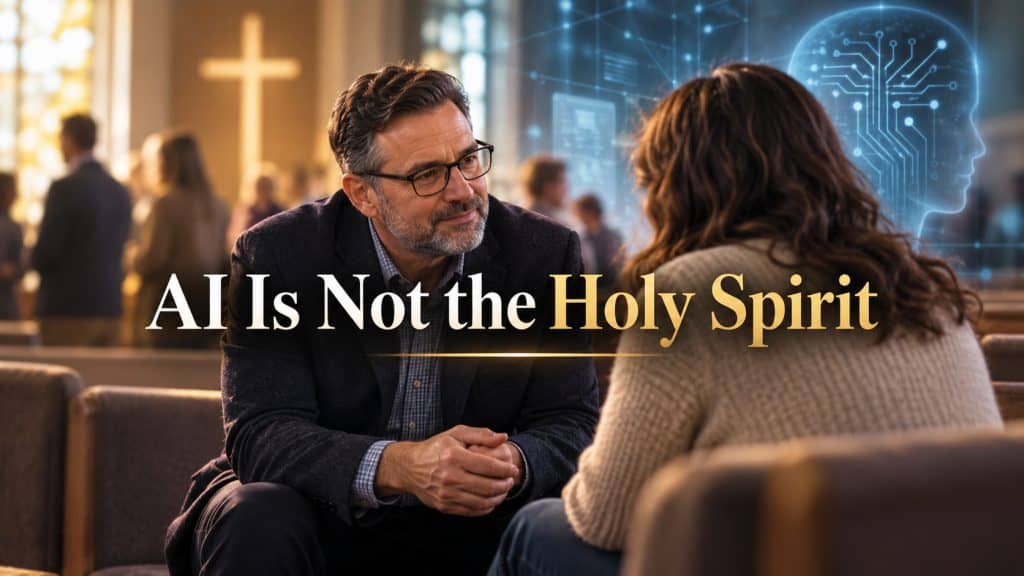
Last week I had the privilege of sitting down with Dave Stone, and our conversation reminded me of something we desperately need to remember in this moment: artificial intelligence will never be able to do what a pastor can do.

Dave shared something profound during our time together: “AI is not the Holy Spirit.” It sounds obvious when you say it out loud, but in a season when AI tools are proliferating faster than we can evaluate them, this statement cuts through all the noise. Yes, AI can help us edit our sermons. Yes, it can assist with wordsmithing and refining our language. But it cannot do the thing that makes preaching actually matter: it cannot connect a human soul with the living God.

This distinction became even clearer when Dave mentioned research showing that loneliness and companionship rank among the top uses of AI. Think about that. People are turning to artificial intelligence for what they should be finding in community. In the church. This isn’t a failure of AI; if anything, it is a misuse of AI. Dave’s warning is a clarion call for the church to lean into what we uniquely offer: genuine, Spirit-empowered presence.

At Great Lakes Christian College, we’ve built our entire institutional identity around this conviction. We know that spiritual formation cannot happen through a screen, no matter how sophisticated the technology. It happens when a student sits in a professor’s office and feels truly known. It happens when suitemates gather around someone who’s grieving and offer the kind of comfort that only the presence of another person can provide. It happens when a visiting speaker takes the time to learn students’ names and genuinely invests in their lives.

Dave spoke beautifully about something he did when he was Senior Minister of Southeast Christian Church. Dave would stand at the escalator to greet latecomers — not to shame them for showing up late, but to learn their names, to notice the visitor who feels out of place, to make the sanctuary feel smaller and more personal. He was describing something that AI could never replicate: the pastoral presence that says, “You matter. I see you. I know your name.”

The irony is that by distinguishing ourselves from AI, by leaning into what technology cannot do, we’re actually making our institutions and churches more relevant, not less. In a world drowning in information and connection-less connectivity, people are hungry for the real thing.

So yes, let’s use AI wisely. But let’s never mistake tools for transformation. Let’s never outsource spiritual formation to a machine. And let’s keep doing what only humans empowered by the Holy Spirit can do: see people, know their names, and love them into the Kingdom.

Some pastors close out the year with an elaborate written review—pages of reflection, goals, and
spiritual inventory. Chris VandeLinde is not one of those pastors. By his own admission, his
December plan is Christmas Eve, a nap, family, and a lot of sweets. I respect the honesty.

But this past January, Chris—Lead Pastor of Cornerstone Christian Church in Shiloh, Illinois,
and my guest on this week’s Better Preaching Podcast—sat down and prayed a dangerous prayer:
“Lord, how do you need me to lead differently this year?” He’d just taken some hits in December,
the kind that felt personal and unfair, arriving right through the vulnerable chinks in his armor.
The enemy has good aim.

What God gave him fits on a sticky note, which is still stuck to his desk: thicker skin, softer
heart, tighter lips.

Thicker skin. You signed up for this when you said yes to leading a movement that calls
suffering gain. You cannot let an emotional attack from someone with no investment in your life
cost you two days of ministry. Be Elijah on Mount Carmel, not Elijah whimpering under the
broom tree.

Softer heart. Here’s the trap: thicker skin tends to harden the heart right along with it. Chris
insists those two must never run parallel. As the skin toughens, the heart should be softening
toward the broken, the hurting, and the far-from-God. Even the people pushing hardest against
you aren’t your enemy. God’s got a plan for them too. Ezekiel says He replaces hearts of stone
with hearts of flesh. That surgery is ongoing.

Tighter lips. Chris is a verbal processor. His words, though thirty minutes of conversation
confirmed it. God’s correction was simple: some things you work out with Me, not with an
audience. Not every frustration needs to be shared. Some prayers are meant to stay prayers.

I told Chris this sounds like the title of his first book, and I’m only half joking. It preaches.
Because most of us in ministry get the formula exactly backwards: thin skin that bruises at every
criticism, a hardening heart that keeps people at a distance, and loose lips that process every
wound out loud.

God’s order is better. Toughen up. Tender up. Hush up.

That’ll preach in 2026—and every year after.