


Last week I had the privilege of sitting down with Dave Stone, and our conversation reminded me of something we desperately need to remember in this moment: artificial intelligence will never be able to do what a pastor can do.
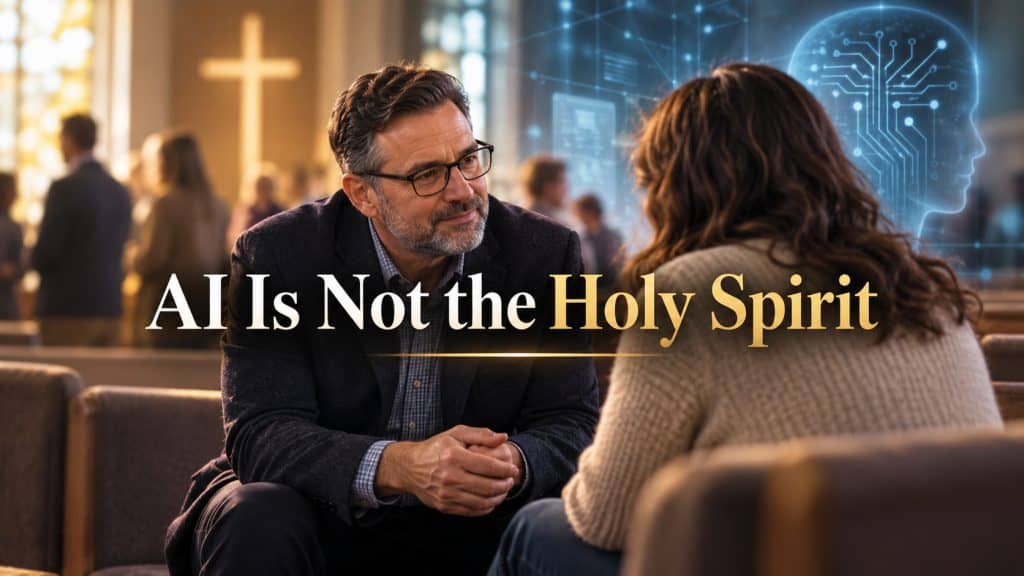
Dave shared something profound during our time together: “AI is not the Holy Spirit.” It sounds obvious when you say it out loud, but in a season when AI tools are proliferating faster than we can evaluate them, this statement cuts through all the noise. Yes, AI can help us edit our sermons. Yes, it can assist with wordsmithing and refining our language. But it cannot do the thing that makes preaching actually matter: it cannot connect a human soul with the living God.
This distinction became even clearer when Dave mentioned research showing that loneliness and companionship rank among the top uses of AI. Think about that. People are turning to artificial intelligence for what they should be finding in community. In the church. This isn’t a failure of AI; if anything, it is a misuse of AI. Dave’s warning is a clarion call for the church to lean into what we uniquely offer: genuine, Spirit-empowered presence.
At Great Lakes Christian College, we’ve built our entire institutional identity around this conviction. We know that spiritual formation cannot happen through a screen, no matter how sophisticated the technology. It happens when a student sits in a professor’s office and feels truly known. It happens when suitemates gather around someone who’s grieving and offer the kind of comfort that only the presence of another person can provide. It happens when a visiting speaker takes the time to learn students’ names and genuinely invests in their lives.
Dave spoke beautifully about something he did when he was Senior Minister of Southeast Christian Church. Dave would stand at the escalator to greet latecomers — not to shame them for showing up late, but to learn their names, to notice the visitor who feels out of place, to make the sanctuary feel smaller and more personal. He was describing something that AI could never replicate: the pastoral presence that says, “You matter. I see you. I know your name.”
The irony is that by distinguishing ourselves from AI, by leaning into what technology cannot do, we’re actually making our institutions and churches more relevant, not less. In a world drowning in information and connection-less connectivity, people are hungry for the real thing.
So yes, let’s use AI wisely. But let’s never mistake tools for transformation. Let’s never outsource spiritual formation to a machine. And let’s keep doing what only humans empowered by the Holy Spirit can do: see people, know their names, and love them into the Kingdom.