
Thicker Skin, Softer Heart, Tighter Lips

August 13, 2026

Some pastors close out the year with an elaborate written review—pages of reflection, goals, and
spiritual inventory. Chris VandeLinde is not one of those pastors. By his own admission, his
December plan is Christmas Eve, a nap, family, and a lot of sweets. I respect the honesty.

But this past January, Chris—Lead Pastor of Cornerstone Christian Church in Shiloh, Illinois,
and my guest on this week’s Better Preaching Podcast—sat down and prayed a dangerous prayer:
“Lord, how do you need me to lead differently this year?” He’d just taken some hits in December,
the kind that felt personal and unfair, arriving right through the vulnerable chinks in his armor.
The enemy has good aim.

What God gave him fits on a sticky note, which is still stuck to his desk: thicker skin, softer
heart, tighter lips.

Thicker skin. You signed up for this when you said yes to leading a movement that calls
suffering gain. You cannot let an emotional attack from someone with no investment in your life
cost you two days of ministry. Be Elijah on Mount Carmel, not Elijah whimpering under the
broom tree.

Softer heart. Here’s the trap: thicker skin tends to harden the heart right along with it. Chris
insists those two must never run parallel. As the skin toughens, the heart should be softening
toward the broken, the hurting, and the far-from-God. Even the people pushing hardest against
you aren’t your enemy. God’s got a plan for them too. Ezekiel says He replaces hearts of stone
with hearts of flesh. That surgery is ongoing.

Tighter lips. Chris is a verbal processor. His words, though thirty minutes of conversation
confirmed it. God’s correction was simple: some things you work out with Me, not with an
audience. Not every frustration needs to be shared. Some prayers are meant to stay prayers.

I told Chris this sounds like the title of his first book, and I’m only half joking. It preaches.
Because most of us in ministry get the formula exactly backwards: thin skin that bruises at every
criticism, a hardening heart that keeps people at a distance, and loose lips that process every
wound out loud.

God’s order is better. Toughen up. Tender up. Hush up.

That’ll preach in 2026—and every year after.

Patrick Lightfoot is a church planter and preacher living in Windsor, Colorado. A graduate of Harding University and Hope International University, Patrick transitioned from a career in sales and marketing to join the church staff at Journey Christian Church in Greeley, Colorado. 

In 2016, Patrick and his wife, Hannah, planted Traverse Christian Church in Windsor, Colorado. In the years since, the congregation has grown to nearly 1,000 people. 

A former College baseball player, Patrick has a “high motor.” He brings energy and intensity to the pulpit each week along with a passion for challenging believers at Traverse to apply what they learn from scripture. Prior to appearing on the Better Preaching Podcast, I asked Patrick three questions.

Q: Who are some preachers you admire and why?

A: Tommy Nelson from Denton Bible Church is my favorite expositor of scripture. He is humorous and loves poetry. I love the way Craig Groeschel presents practical application. Francis Chan and Matt Chandler are both great teachers of the Word. I love the passion with which David Platt teaches. Finally, John Mark Comer and Tyler Staton from Bridgetown Church are both great with historical context and spiritual disciplines

Q: When you think about the future of preaching what excites you and concerns you?

A: What excites me for the future of preaching is that we have a culture that is hungry for truth. This is especially evident in younger men. What concerns me is that some preachers focus more on creative communication than they do teaching God’s Word truthfully. We can’t make it more about delivery than content. His Word is enough.

Q: What’s one piece of preaching advice you would offer to your younger self?

A: Say “yes” to any and all speaking opportunities, no matter how small or big!

Walter Neuenschwander didn’t want to be a preacher.

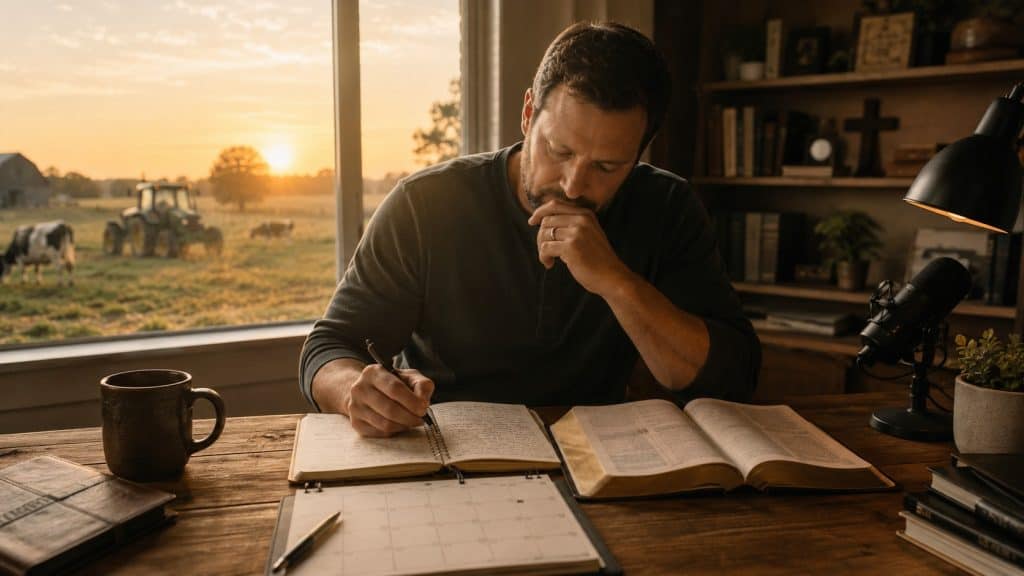
He wanted to drive a tractor. He wanted to take care of cows. And honestly? When he tells that story, something in it rings true for a lot of people who end up in ministry. The call came early and clear, and he ran from it anyway.

I got to sit down with Walter recently on the Better Preaching Podcast, and what struck me most wasn’t the dramatic Jonah moment where everything turned around (though that’s a great story, and you should listen to the episode). What struck me was something quieter. Something almost boring, in the best possible way.

When I asked Walter what advice he’d give to someone standing where he stood three or four years ago — preaching occasionally, not yet doing it week in and week out — he didn’t say anything flashy. He didn’t talk about charisma or delivery or finding your voice. He said: trust a routine.

Don’t be in a hurry. Start early. Plan ahead. Let the sermon breathe before you have to preach it.

That’s it. That’s the advice.

I’ve been around preaching my whole adult life, and I keep finding that the preachers who last,  the ones who grow, the ones whose congregations are genuinely fed week after week, they all have some version of this. A rhythm. A cadence. A way of living with the text before they have to stand in front of people and open their mouths.

Walter grew up sitting under Ron Fisher who, for decades, taught at Great Lakes Christian College and ministered at Northview Church of Christ. He was a legendary communicator who preached with one hand on the Bible and one hand on the newspaper. Fisher’s influence shaped a generation of ministers across mid-Michigan. And now Walter is doing the same thing at South Lansing Christian Church. Not because he set out to become a preacher, but because he finally stopped running.

God has a habit of doing that. Calling the reluctant. Developing the willing. And apparently, giving them a decent sermon routine in the process.

I recently sat down with Ben Cachiaras for the Better Preaching Podcast. Ben has served Mountain Christian Church near Baltimore for thirty of its 201 years, and I wanted to hear how a kid from Rochester, Minnesota ended up giving his life to preaching.

He almost didn’t.

Rochester is home to the Mayo Clinic, and Ben grew up surrounded by doctors’ kids. He was bright. School came easily. Plenty of people told him medicine would be a noble path, and he was leaning that way. Then he went to church camp.

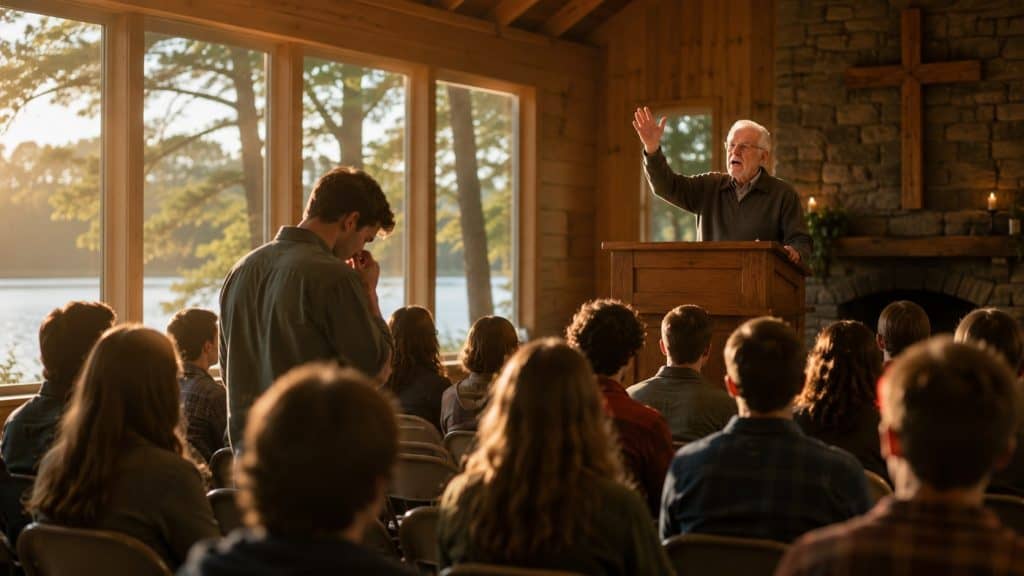
Pine Haven Christian Assembly sits on a Minnesota lake where Ben had been baptized years earlier. That weekend, the preacher in the hot little chapel was Ben’s grandfather—a Greek immigrant who came to Christ at Johnson Bible College in the early 1900s and served Minnesota Bible College from 1919 until his death in 1983. Picture it: folding chairs, restless high schoolers, and a nearly ninety-year-old man preaching with the passion of someone half his age.

At the end, he gave an invitation to salvation, and a couple of kids came forward. But he wasn’t finished. He issued a second call, for anyone willing to give the best energy of their life to serving the local church. To be a preacher. Then he added the line that undid his grandson: “If you think to yourself, ‘Yeah, I could probably do that,’ I’m not talking to you. I’m talking to the one who knows you can’t do anything else and have peace with God.”

Ben melted. He walked the aisle crying, stood beside his grandfather, and repeated a confession the old man composed on the spot. Med school was over before it started. He enrolled at Minnesota Bible College, and the trajectory of his life bent toward the pulpit for good.

Looking back, Ben suspects his grandfather knew exactly who was sitting in those folding chairs that day. I suspect he’s right.

Here’s what stayed with me. Ben said that moment makes him want to grab every seventh, eighth, and tenth grader, look them in the eye, and tell them it’s not too early to think about ministry. I grew up hearing my preacher say the best and brightest of our generation should go to Bible college and enter the ministry, the highest calling any of us can pursue.

Somewhere along the way, many of our churches went quiet on that. We tell our sharpest students to pursue engineering or medicine, and those are noble callings. But somebody has to say what Ben’s grandfather said.

Who’s the kid in your congregation waiting for a bold, clear call?

Say it. They may be listening harder than you think.