



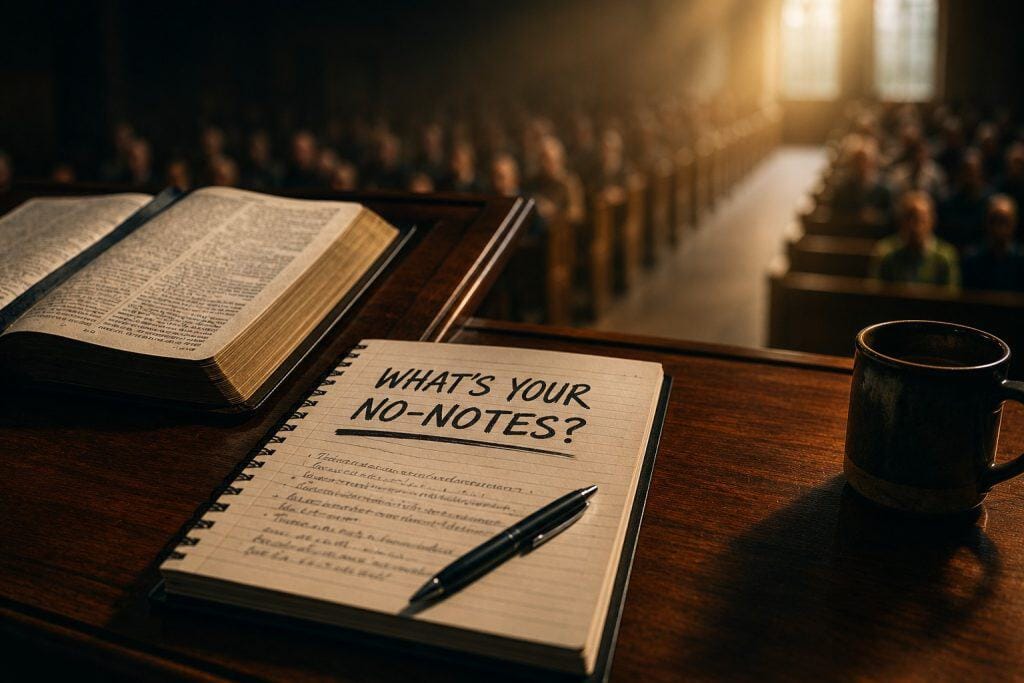
On a recent episode of the Better Preaching Podcast, Tyler McKenzie made a confession I suspect most of us preachers could make: comparison nearly stole his love for preaching.
Tyler grew up an athlete, and at first the competitive instinct served him well. He studied great preachers the way a young ballplayer studies Ken Griffey Jr.’s swing — Francis Chan’s passion, Andy Stanley’s conversational ease, Tim Keller’s gift for engaging skeptics. Tyler defends that kind of emulation, and so do I. There is no craft on earth where we wouldn’t tell a rookie to study the greats.
But somewhere along the way, emulation curdled into competition. “I want to be the best preacher of my generation,” he caught himself thinking. “The best preacher in my city.” And the joy began to leak out. He couldn’t walk off stage and savor being used by God. Instead, he cataloged the seven things to fix before the next service. He couldn’t listen to another man’s sermon without keeping score. Pride when he won. Envy when he lost. The man who became a preacher because he loved sermons, the guy who found deep connection to God through sermon preparation, could no longer enjoy delivering one.
Then Tyler told me about the decision that began to break those chains, and it surprised me. He started carrying a manuscript.
For his first seven or eight years, Tyler was a no-notes preacher. Eventually he admitted he wasn’t doing it because it made his preaching better. He was doing it because he liked what people said about it: “He just goes up there with his Bible and throws it down.” The missing café table most preachers set their notes on became a trophy. So, he humbled himself, wrote a manuscript, and carried it on stage — a small, visible act of surrender declaring this is not about what people think of me. This is about preaching the Word of God. Period.
It also gave him back three hours a week. Humility, it turns out, is efficient.
Teddy Roosevelt usually gets credit for saying “comparison is the thief of joy.” Whoever said it first, every preacher eventually proves it true. Here’s the question I’ve been chewing on since we put the episode in the can: What’s my no-notes? What’s the thing I do in the pulpit not because it serves the Word, but because it serves my reputation?
Find it. Name it. Lay it down.
The joy you get back is worth far more than the applause.


